
Homepage
Tel: 01252 344868
Welcome to The Cambridge Practice
We are currently Aldershot's largest GP Practice, supporting the healthcare needs of over 22,000 patients in the local area. We are located at two sites. Our main surgery is at the Aldershot Centre for Health, Hospital Hill, Aldershot, Hampshire, GU11 1AY - and our smaller branch surgery is at 276 Lower Farnham Road, Aldershot, GU11 3RB.

CONTACT US ONLINE WITH PATIENT TRIAGE
If you need help with a non-urgent medical or admin request, you can now contact us online.
Special Announcements >>
September 2026 Newsletter
 September 2026- Patient Newsletter
21st October 2026
September 2026- Patient Newsletter
21st October 2026
Click on the thumbnail image to view our Newsletter PDF in a new browser tab.
August 2026 Newsletter
 August 2026- Patient Newsletter
25th September 2026
August 2026- Patient Newsletter
25th September 2026
Click on the thumbnail image to view our Newsletter PDF in a new browser tab
July 2026 Newsletter
 July 2026- Patient Newsletter
22nd July 2026
July 2026- Patient Newsletter
22nd July 2026
Click on the thumbnail image to view our Newsletter PDF in a new browser tab.
June 2026 Newsletter
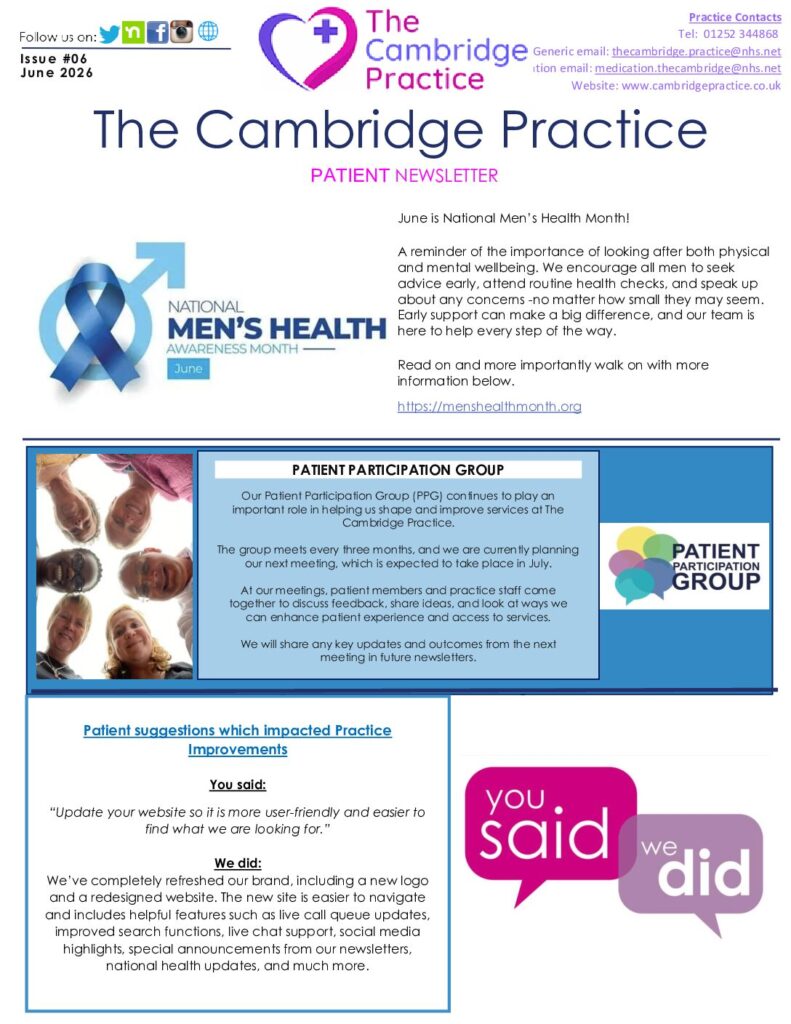 June 2026- Patient Newsletter
9th July 2026
June 2026- Patient Newsletter
9th July 2026
Click on the thumbnail image to view our Newsletter PDF in a new browser tab
May 2026 Newsletter
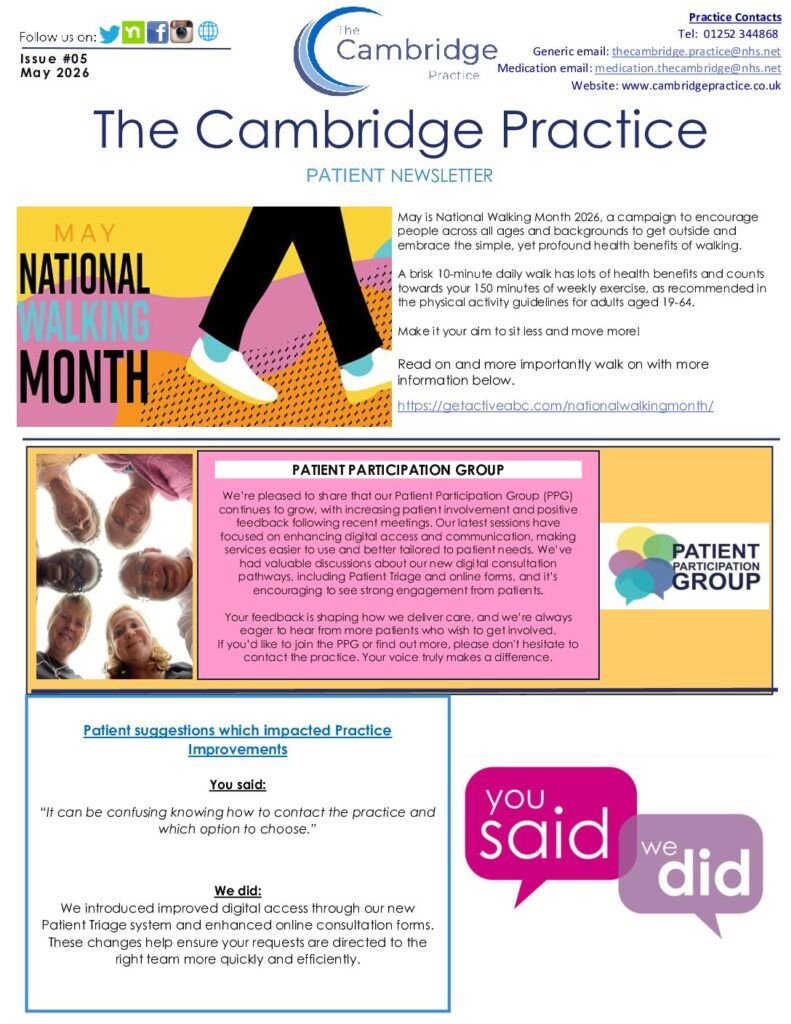 May-2026-Patient-Newsletter
28th May 2026
May-2026-Patient-Newsletter
28th May 2026
Click on the thumbnail image to view our Newsletter PDF in a new browser tab.
April 2026 Newsletter
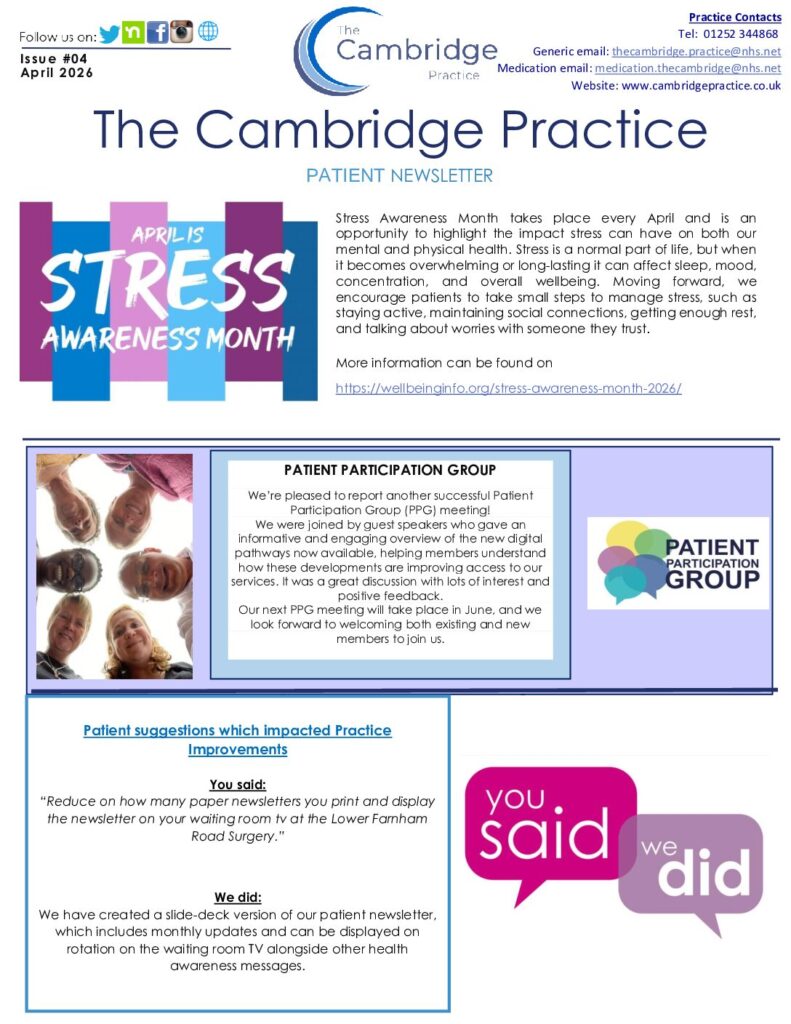 April-2026-Patient-Newsletter
7th May 2026
April-2026-Patient-Newsletter
7th May 2026
Click on the thumbnail image to view our Newsletter PDF in a new browser tab.
March 2026 Newsletter
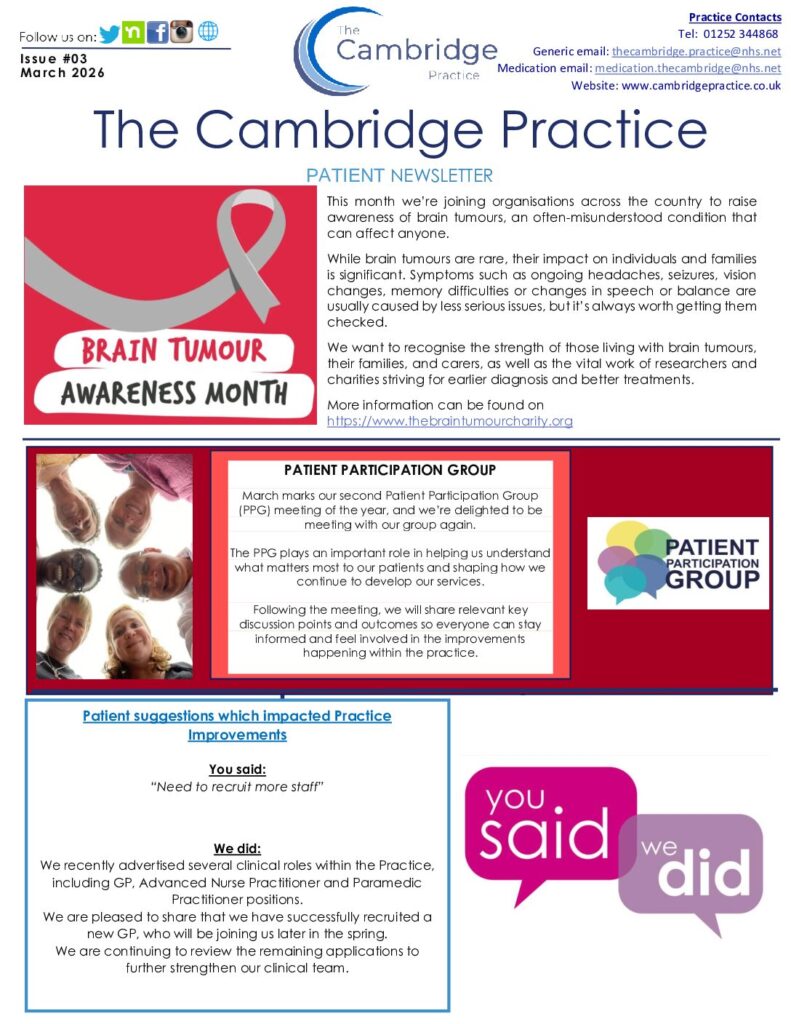 March-2026-Patient-Newsletter
20th March 2026
March-2026-Patient-Newsletter
20th March 2026
Click on the thumbnail image to view our Newsletter PDF in a new browser tab.


 Health News – NHS England
- NHS supports record numbers of people living with dementia as target achieved 22nd October 2026
- NHS rolls out prescription ready alerts on smartwatches and mobiles 11th October 2026
- Ominous signs of winter pressure growing as A&Es and ambulances see record September 8th October 2026
- NHS cuts British forces’ waiting times by a month in targeted campaign 3rd October 2026
- NHS protects thousands of rough sleepers ahead of winter with vital vaccines 1st October 2026